
What is a Pole Barn?
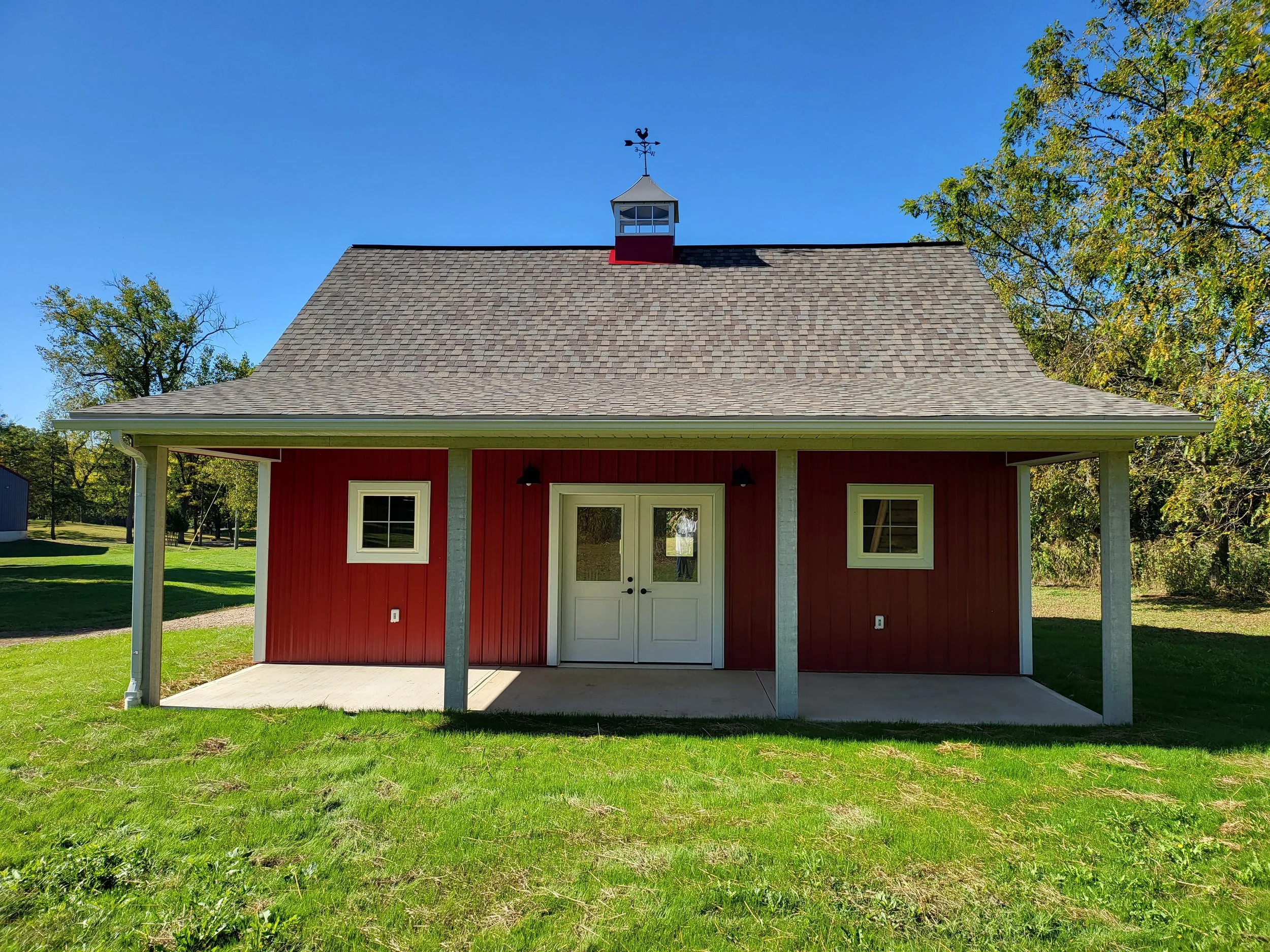
If you've been researching storage solutions, agricultural buildings, or garage options, you've probably come across the term "pole building" — and maybe "pole barn" or "post-frame building" too. They all refer to essentially the same thing, but if you're new to the concept, it can feel like everyone already knows something you don't.
Don't worry. By the end of this guide, you'll have a solid understanding of what a pole building is, how it's built, why so many people choose them, and whether one might be the right fit for your property.
So... What Exactly Is a Pole Building?
A pole building — also called a pole barn or post-frame building — is a type of structure built around a framework of large vertical poles or posts buried directly into the ground (or anchored to a concrete foundation). These poles serve as the primary structural support for the entire building, carrying the load of the roof and walls without the need for a traditional concrete perimeter foundation.
Think of it this way: instead of building a foundation first and then constructing walls on top of it, a pole building starts with the poles themselves. Everything else — the roof trusses, wall girts, and exterior cladding — is attached to that vertical framework.
It's a deceptively simple system, and that simplicity is a big part of what makes pole buildings so popular.
Pole Building vs. Pole Barn — Is There a Difference?
You'll hear both terms used interchangeably, and for the most part, they mean the same thing. "Pole barn" is the older, more traditional term that became common when these structures were primarily used for agricultural purposes — storing hay, housing livestock, and sheltering farm equipment.
"Pole building" and "post-frame building" are broader, more modern terms that reflect how far this construction method has evolved. Today, post-frame construction is used for everything from simple storage sheds to fully finished commercial buildings, garages, equestrian facilities, event venues, and even homes.
At Kirkham Building System, Inc., we use the terms interchangeably — but what matters most to us is building the right structure for your specific needs, whatever you choose to call it.
How Is a Pole Building Constructed?
Understanding the basic construction process helps demystify why pole buildings are so efficient and cost-effective. Here's a general overview of how it comes together:
1. Site Preparation The building site is cleared, graded, and laid out. Proper drainage planning happens at this stage to ensure water moves away from the structure.
2. Post Setting Large treated wood posts — typically 4x6, 6x6, or larger — are set into the ground at regular intervals, usually every 8 to 12 feet. The posts are either buried directly in the earth (with proper treatment to resist rot and moisture) or anchored into concrete footings. This is the backbone of the entire structure.
3. Framing the Roof Roof trusses are engineered and installed across the tops of the posts. The truss design determines the roof pitch, the span of the building, and how the interior space can be used. Wide-clearance trusses are one of the reasons pole buildings can achieve such large open interiors without interior support columns.
4. Wall Framing Horizontal girts — lumber running between the posts — are attached to frame the walls. These provide structure for attaching the exterior cladding and any insulation.
5. Roofing and Siding Steel panels are the most common choice for both roofing and siding on pole buildings. Steel is durable, low-maintenance, and available in a wide range of colors. Wood board-and-batten siding is another popular option for a more traditional look.
6. Doors, Windows, and Finishing Overhead doors, sliding doors, walk-in doors, and windows are installed based on the building's design. From here, interior finishing options range from bare bones (exposed framing) to fully insulated, drywalled, and climate-controlled spaces.
What Makes Pole Buildings Different From Traditional Construction?
The key difference is the foundation — or more accurately, the absence of a traditional one. Conventional buildings require a continuous concrete perimeter foundation or slab before any framing can begin. Pole buildings skip that step, using the buried or anchored posts to transfer the structural load directly into the ground.
This distinction has some major practical benefits:
Faster construction. Without waiting for a full concrete foundation to cure, pole buildings go up significantly faster than conventionally framed structures of the same size.
Lower cost per square foot. Less concrete, fewer materials, and faster labor all add up to real savings. Pole buildings consistently offer more square footage for the dollar than traditional construction.
Wider open spans. Because the posts carry the load, pole buildings don't need interior load-bearing walls. That means massive, column-free interior spaces that are ideal for storing large equipment, hosting events, or creating open workshop areas.
Versatility. Pole buildings can be built on a wide variety of soil types and terrain conditions where a traditional foundation might be difficult or expensive to construct.
What Are Pole Buildings Used For?
This is where it gets fun. The short answer is: almost anything. The longer answer includes:
Agricultural buildings — equipment storage, hay barns, grain storage, livestock shelters
Garages — single car to multi-vehicle, including RV and boat storage
Workshops and hobby spaces — woodworking shops, mechanic bays, home gyms
Commercial buildings — warehouses, retail spaces, light manufacturing facilities
Equestrian facilities — horse barns, riding arenas, tack rooms
Event venues — wedding barns, community centers, entertainment spaces
Residential — barndominium-style homes are a growing trend in post-frame construction
If you can imagine a use for a large, flexible structure, a pole building can probably be designed to accommodate it.
How Long Do Pole Buildings Last?
A well-built pole building is a long-term investment. With quality materials and proper construction, you can expect a pole building to last 40 to 60 years or more. The treated posts used in modern post-frame construction are rated to resist rot, insects, and ground moisture for decades. Steel roofing and siding, when properly maintained, holds up exceptionally well against the elements.
The key word in all of this is "well-built." Quality materials and experienced craftsmanship make all the difference — which is why choosing the right builder matters just as much as choosing the right design.
Do Pole Buildings Require a Concrete Floor?
Not necessarily — and this is one of the more flexible aspects of post-frame construction. Many pole buildings, particularly those used for agricultural storage, are built with a simple gravel floor. It's cost-effective, functional, and easy to maintain.
That said, a concrete floor is highly recommended for garages, workshops, and any space where you'll be working, parking finished vehicles, or spending significant time. A concrete slab adds durability, makes the space easier to clean, and is essential if you plan to insulate and heat the building.
The good news is that the concrete floor doesn't have to be poured before construction begins, as it would in traditional building methods. It can be added during or after the building is up — giving you more flexibility on timing and budget.
Are Pole Buildings Permitted and Code-Compliant?
Yes — when properly designed and constructed, pole buildings meet local building codes just like any other structure. Most jurisdictions require a building permit for any permanent structure above a certain size, and your builder should be familiar with the permitting process in your area.
At Kirkham Building System, Inc., we help our customers navigate local requirements from the start, so there are no surprises down the road. Every building we construct is designed to meet or exceed applicable load requirements for wind, snow, and seismic conditions in your region.
Is a Pole Building Right for You?
If you're looking for a cost-effective, durable, and highly versatile structure for your property — whether for agricultural, personal, or commercial use — a pole building is almost certainly worth serious consideration.
Here are a few signs a pole building might be the right fit:
You need a large, open interior space without interior columns
You want more building for your budget
You need the structure up quickly
Your use requires flexibility in floor plan and door placement
You're looking for a long-term, low-maintenance investment
Let's Talk About Your Project
Now that you know the basics, the best next step is a conversation. At Kirkham Building System, Inc., we've been helping property owners design and build pole buildings that work hard and last for generations. We'll listen to what you need, help you think through the details, and give you a straight answer on what's possible for your property and budget.
Contact us today to schedule your free consultation — no pressure, just a conversation about what you're looking for.
Kirkham Building System, Inc. — Pole Building Specialists. Built Right. Built to Last.